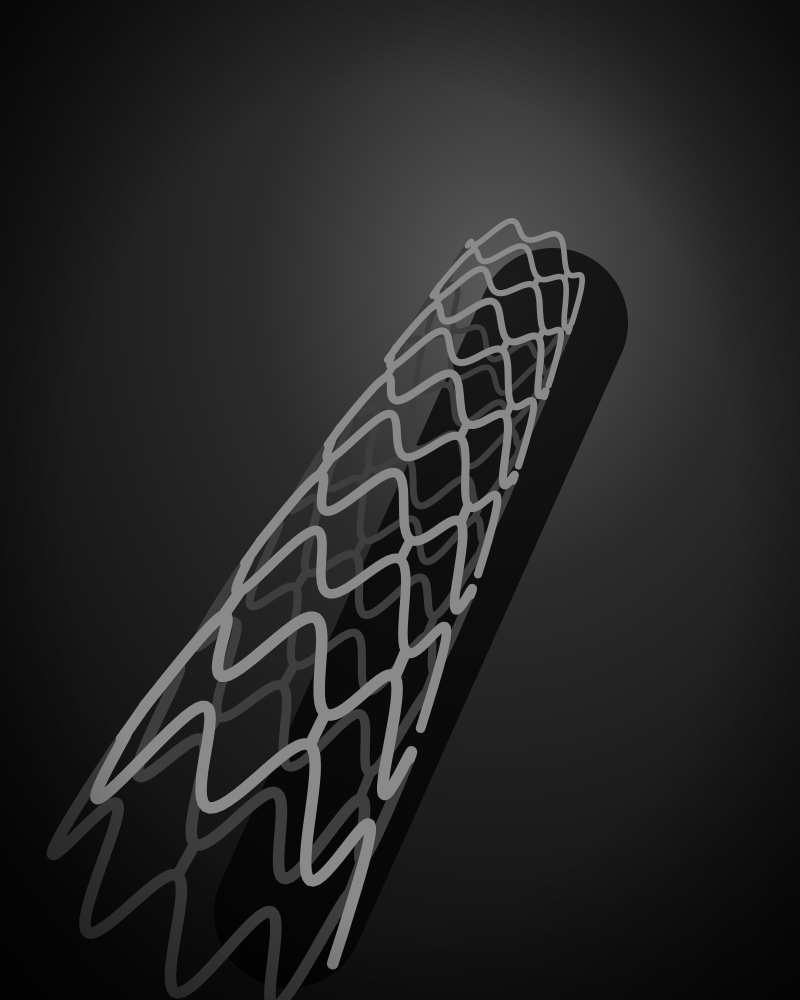
Optimizing a medical-grade adhesive
The results from this project can be found in this published paper.
Stent grafts are medical devices implanted in the body to repair weakened arteries, and they rely on specialised adhesives to hold their components together. In this project, in collaboration with W. L. Gore & Associates, the production process of a new resin used as a vascular stent adhesive was optimized. Each experimental batch occupies a full-scale production unit for about 40 hours and costs a five-figure sum, so the usual approach of running a screening experiment followed by a separate optimization experiment was not affordable. Instead, a mixed-level OMARS design was used to study the many process factors across the polymerization, coagulation, washing and drying steps in a single experiment. As part of this project, I analyzed the resulting data using the two-step analysis method for OMARS designs that I co-developed, and compared the results with an all-subsets regression (MIO) approach. Both analyses pointed to the same process settings that keep the melt flow index within specification while minimizing residual impurity in the final product. These settings are now being tested for robustness before commercial production.